City · Dawson County · County seat · Population 10,348 (2020 census) · ZIP 68850 · Founded 1871
About Lexington
Lexington is a city of 10,348 people (2020), the seat of Dawson County and the 16th-largest city in Nebraska, at 2,392 feet on the north side of the Platte valley. US 30 and the Union Pacific main line run through the middle of town; US 283 ends at US 30 near downtown and runs south to I-80 (Exit 237), about 3 miles away, and on past Johnson Lake, about 9 miles southwest. Lexington has Lexington Regional Health Center, the public schools, a Central Community College center, the Lexington Public Library, the Dawson County Fairgrounds and Jim Kelly Field airport. About 65 percent of residents are Hispanic or Latino (2020 census). Lexington is on Central Time.
History
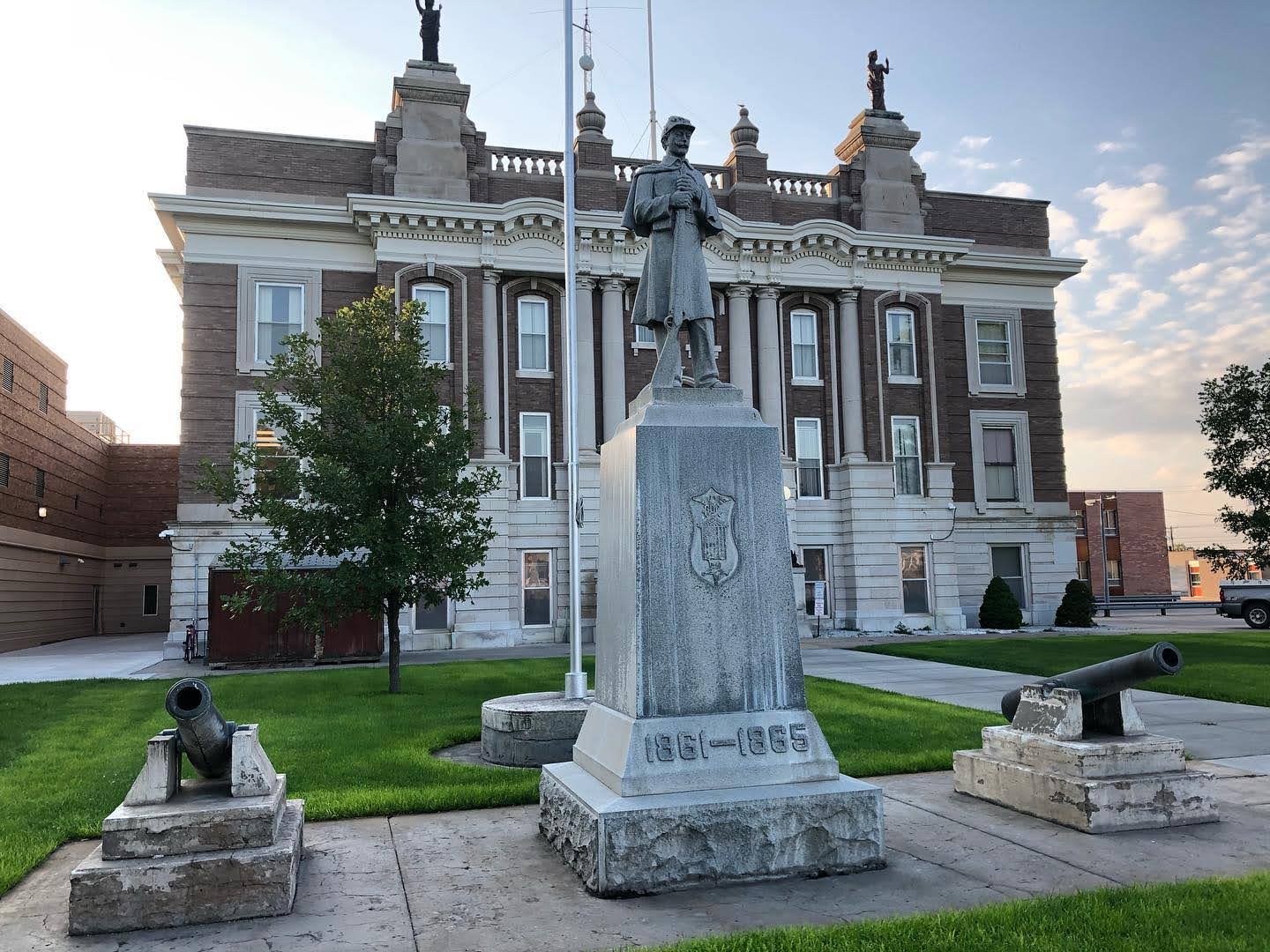
The first settlement was south of the river, where a trading post and the Plum Creek stage and Pony Express station stood in the early 1860s, in what is now Phelps County. In August 1864 Cheyenne raids on wagon trains and road ranches there became known as the Plum Creek Massacre. When the Union Pacific reached the north bank in 1866, Daniel Freeman and the settlement moved to the tracks. On August 7, 1867, Cheyenne under Turkey Leg derailed a westbound freight and killed three railroad men a few miles west of town; a marker on US 30 tells the story. The town, founded in 1871 as Plum Creek, got a post office at the depot in 1872 and was platted in 1873. Residents voted in 1889 to rename it Lexington, for the Revolutionary War battle. The Beaux Arts courthouse was built in 1913–14. In 1990 IBP opened a beef plant in the former Sperry-New Holland combine plant, the first of a series of large packing plants in small Nebraska cities; Lexington grew from 6,601 people to 10,011 in the 1990s. Tyson, owner since 2001, announced on November 21, 2025, that it would close the plant, which had 3,212 positions; it stopped operating on January 20, 2026, and the last of the closing crew left on July 24, 2026.
Highways and trails through Lexington
| Route | One way | Other way |
|---|---|---|
| US 30Through town beside the Union Pacific | East to Overton and Kearney | West to Cozad and Gothenburg |
| US 283Ends at US 30 in Lexington | South to I-80 (Exit 237), Johnson Lake and Elwood | |
| I-80Exit 237, about 3 mi south | East to Kearney | West to Cozad and North Platte |
Nearby towns
| Overton | about 11 mi east-southeast | US 30 |
| Cozad | about 14 mi west-northwest | US 30 or I-80 |
| Elwood | about 14 mi south-southwest | US 283 |
| Sumner | about 17 mi northeast | County roads |
| Eddyville | about 17 mi north-northeast | County roads |
| Bertrand | about 18 mi south-southeast | US 283 and NE 23 |
| Elm Creek | about 20 mi east-southeast | US 30 or I-80 |
| Gothenburg | about 24 mi west-northwest | US 30 or I-80 |
| Farnam | about 25 mi west | I-80 and NE 21, NE 23 |
| Holdrege | about 30 mi southeast | US 283 and NE 23 |
| Kearney | about 35 mi east | I-80 or US 30 |
Things to see
the Dawson County Courthouse (1913–14, National Register) · the Heartland Museum of Military Vehicles, 606 Heartland Rd. at I-80 · the Dawson County Historical Society Museum, 805 Taft St. · the Plum Creek Railroad Attack marker on US 30 west of town · the Ira Webster Olive House and Harry V. Temple House on East 13th Street (National Register; private) · Mac’s Creek Winery & Brewery · the Plum Creek Disc Golf Course · Johnson Lake State Recreation Area, about 9 miles southwest
Events in Lexington
- Dawson County Fair
Dawson County Fair, a county fair in Lexington, Nebraska.
Know of another event here? Tell us about it.
Schools and health care
Schools: Lexington Public Schools, 300 S. Washington St., (308) 324-4681: Lexington High School (9–12), Lexington Middle School (6–8), Bryan, Morton, Sandoz and Pershing elementary schools and the Early Learning Academy; Central Community College – Lexington Center, 1501 Plum Creek Pkwy., (308) 324-8480
Health care: Lexington Regional Health Center, 1201 N. Erie St., (308) 324-5651, open 24 hours
Sources: U.S. Census; Wikipedia; Dawson County (dawsoncountyne.gov); History Nebraska (markers, "Dawson County's True Namesake," "How a Lexington meatpacking plant changed Nebraska," "The Instant Town"); Andreas, History of the State of Nebraska (1882); Fitzpatrick, Nebraska Place-Names (1925); NEGenWeb Dawson County; National Register; National Park Service (Pony Express NHT); HMdb; Nebraska Game and Parks; KRVN; Rural Radio Network; 1011 Now; Gothenburg Leader; school districts; NE211. Distances marked "about" are straight-line estimates.
Lexington Businesses & Places
198 listings in Lexington.
Click a category to see the businesses.
Eat & Drink (24)
- Burger King — Burger King
- Coffee Cottage — Cafe / Coffee Shop
- Dairy Queen Lexington — Dairy Queen
- El Rancho Viejo — Mexican Restaurant
- El Sazon Taquizas — Mexican Restaurant
- Fat Dogs — American Restaurant
- Hardee's Lexington — Hardee's
- Jimmy John's — Jimmy John's
- Kirk's Nebraskaland Restaurant — Diner / Family Restaurant
- Lexington Greyhound Station — American Restaurant
- Mac's Creek Winery & Brewery — Winery & Vineyard
- Madeline's Cafe & Bakery — Bakery
- Madeline's Cafe and Bakery — Bakery
- McDonald's - Lexington (2706 Plum Creek Pkwy) — McDonald's
- Pizza Hut Lexington — Pizza Hut
- Runza Lexington — Runza
- Subway – 200 Frontier St, Lexington — Subway
- Subway – 507 W Pacific, Lexington — Subway
- Taco Bell Lexington — Mexican Restaurant
- Taqueria El Paisa — Mexican Restaurant
- Taqueria Rosario's Foods — Mexican Restaurant
- The Nautical Rose & Lakeshore Marina — Bar & Grill
- Three 21 Tavern — Bar & Grill
- Toro Tom's Sports Bar & Grill — Bar & Grill
Stay (7)
- Comfort Inn — Hotel
- Creekside Cottages at Mac's Creek — Cabin
- Days Inn by Wyndham Lexington NE — Motel
- Econo Lodge — Motel
- Holiday Inn Express & Suites — Hotel
- Mid Rest Inn — Motel
- Surestay Hotel by Best Western — Hotel
Outdoors & Recreation (4)
- Bittern's Call WMA — Public Hunting Areas & WMAs
- Grandma's RV Park — Campgrounds & RV Parks
- Plum Creek Disc Golf Course — Disc Golf Course
- The Nautical Rose & Lakeshore Marina — Boat Ramps & Marinas
Places to Visit (3)
- Dawson County Historical Society and Museum — History & Heritage Museums
- Heartland Museum of Military Vehicles — Military Museums
- Plum Creek Railroad Attack Marker — Historic Marker
Events & Venues (3)
- Dawson County Fair — County Fair
- Dawson County Fairgrounds — Fairground
- Strike & Spare Bowl & Sports Bar — Bowling Alley
Health & Emergency (20)
- Fairview Veterinary Clinic — Veterinarian
- Family Physical Therapy — Physical Therapy
- Family Physical Therapy & Sports Center — Physical Therapy
- Great Plains Clinic of Chiropractic — Chiropractor
- Heartland Family Chiropractic — Chiropractor
- Jerrold A. Remmenga, DDS — Dentist & Dental Office
- Jerrold A. Remmenga, DDS, PC — Dentist & Dental Office
- Lexington Animal Clinic — Veterinarian
- Lexington Family Chiropractic P.C. — Chiropractor
- Lexington Family Dentistry — Dentist & Dental Office
- Lexington Family Eyecare — Optometrist
- Lexington Regional Health Center — Hospital
- Lexington Regional Health Center d/b/a Family Medicine Specialists — Medical Clinic
- Michael Mandelko, DDS — Dentist & Dental Office
- Mike Mandelko, D.D.S. — Dentist & Dental Office
- Miracle-Ear Hearing Aid Center Lexington — Hearing Aids
- Overton Veterinary Services — Veterinarian
- Plum Creek Dentistry — Dentist & Dental Office
- Plum Creek Medical Group — Medical Clinic
- Sheen Family Chiropractic — Chiropractor
Shopping & Gifts (8)
- 237 Hardware — Hardware Store
- Lexington Dollar Fresh Hy-Vee — Grocery
- Lexington Station – Country Partners — Convenience store
- Mission Avenue Thrift — Thrift & Consignment Store
- Nelson's Furniture & Floor Covering — Furniture
- Plum Creek Market Place — Grocery
- Viaero Wireless — Cell Phone Store
- Wal-Mart — Department store
Community & Faith (26)
- Asambleas de Dios Filadelfia — Pentecostal
- Buffalo Grove Presbyterian Church — Presbyterian Church
- Calvary Assembly of God — Pentecostal
- Camino de Vida EFC — Evangelical Free Church
- Church of Jesus Christ of Latter-day Saints — Latter-day Saints / Community of Christ
- Evergreen Cemetery — Cemeteries
- First Lutheran Church — Lutheran Church
- First Trinity Lutheran Cemetery — Cemeteries
- Grace Lutheran Church — Lutheran Church
- Greenwood Cemetery — Cemeteries
- HARA ARES Net — Heartland Amateur Radio Association — Amateur Radio Event
- HARA Flea Market — Heartland Amateur Radio Association — Amateur Radio Event
- Heartland Amateur Radio Association — Amateur Radio Club
- Hermann Sohne Cemetery — Cemeteries
- Hewitt Cemetery — Cemeteries
- Lexington Evangelical Free Church — Evangelical Free Church
- Lexington First UMC — Methodist Church
- Lexington Hispanic Seventh-day Adventist Company — Seventh-day Adventist Church
- Lexington, First Presbyterian Church — Presbyterian Church
- Mount Hope Cemetery — Cemeteries
- Rose Hill Cemetery — Cemeteries
- St. Ann Catholic Church Lexington — Catholic Church
- St. Ann’s Cemetery — Cemeteries
- St. John’s Lutheran Cemetery — Cemeteries
- St. Peter's in the Valley Church — Episcopal Church
- Trinity Lutheran Church — Lutheran Church
Government & Resources (25)
- ACCESSNebraska Office — Developmental & Social Services
- Crossroads Mission Avenue-Lexington — Food Pantry
- Dawson County Assessor — County Assessor
- Dawson County Attorney's Office — County Attorney
- Dawson County Clerk — County Clerk
- Dawson County Court — County Court
- Dawson County Courthouse — Court House
- Dawson County Driver License Office — County Driver License
- Dawson County Emergency Management — Emergency Management
- Dawson County Sheriff — County Sheriff
- Dawson County Treasurer — County Treasurer
- Dawson County Weed Superintendent — County Weed Control
- Dawson-Frontier Veterans Service Office — Veterans Office
- Grand Generation Center — Senior Citizen Center
- Lexington Area Chamber of Commerce — Chamber of Commerce
- Lexington City Hall — City Hall
- Lexington Fire Station — Fire Station
- Lexington Food Pantry — Food Pantry
- Lexington Housing Authority — Housing Authority
- Lexington Mobile Food Distribution — Mobile & Pop-Up Food Distribution
- Lexington Police Department — Police Station
- Lexington Post Office — Post Office
- Lexington Public Library — Libraries
- Lexington USDA Service Center — USDA Service Center (FSA/NRCS)
- Ridgeway Senior Living — Assisted Living
Professional Services (17)
- Barney Insurance — Insurance
- Contryman Associates, PC — Accountant
- Edgewater Insurance & Real Estate — Insurance
- Edward Jones - Dan Clark — Financial Consultant
- Edward Jones - Garth Mins & Keenan Kremke — Financial Consultant
- Farm Bureau Financial Services — Insurance
- First Interstate Bank — Banking
- Heldt, McKeone & Copley — Attorney
- Home Federal Bank — Banking
- Homestead Bank — Banking
- Lexington Self Storage — Self-Storage Facility
- McChesney, Martin and Sagehorn, P.C. — Attorney
- Nebraska Title Company
- Old Town Storage - Lexington Adams St — Self-Storage Facility
- Pathway Bank — Banking
- Pinnacle Bank — Banking
- Trius Federal Credit Union — Banking
Automotive (15)
- Bills Volume Sales Lexington — Used Car Dealer
- Bridge Street Auto Lexington — Used Car Dealer
- Dawson Motor Company — Used Car Dealer
- Heartland Chevrolet — Franchised New Car Dealer
- Lex Car Sales — Used Car Dealer
- Lexington Station – Country Partners — Fuel & Gas Station
- NAPA Auto Parts (S & W) — Auto Parts
- Nava Auto Sales — Used Car Dealer
- Nebraskaland Tire — Tire Shop
- Pacific Auto Sales — Used Car Dealer
- Platte Valley Auto — Franchised New Car Dealer
- Pump & Pantry — Pump & Pantry
- Randys Body Shop — Auto Body Repair
- T.O. Haas Tire — Tire Shop
- Zamora Motors — Used Car Dealer
Education (11)
- Bryan Elementary School — Elementary & Middle School
- Central Community College – Lexington Center — Community College
- Dawson County Extension — County Extension Office
- Early Intervention/Homebound — Elementary & Middle School
- Early Learning Academy — Elementary & Middle School
- Lexington High School — High School
- Lexington Middle School — Elementary & Middle School
- Lexington Public Schools — School District (K-12 / General)
- Morton Elementary School — Elementary & Middle School
- Pershing Elementary School — Elementary & Middle School
- Sandoz Elementary School — Elementary & Middle School
Agriculture & Farm (10)
- Bomgaars — Bomgaars
- Central Valley Irrigation — Valley Irrigation Dealer
- Country Partners Cooperative — Farm Coop
- Holdrege Irrigation — Reinke Dealer
- Horses by Jake — Boarding Stable
- LandMark Implement — Equipment Dealers
- Lexington Station – Country Partners — Farm Coop
- Overton Veterinary Services — Equine Veterinarian
- Titan Machinery — Equipment Dealers
- Tyson Fresh Meats — Packing House
Trades & Construction (9)
- Double MW Sheds — Portable Buildings and Sheds
- Handyman Plumbing Service — General Plumbing
- Jones Plumbing & Heating — Plumbing & Heating
- Jones Plumbing & Heating, Inc. — Plumbing & Heating
- Linden's Plumbing & Septic Service — General Plumbing
- Martin Electric Company — Electrical
- Mead Lumber Co. Inc. — Lumber
- Overton Sand & Gravel — Sand, Gravel and Aggregate
- Paulsen — Ready Mix Concrete Supplier
Utilities (6)
- Buffalo Bill Mobile Home Park — Water Utility / District
- City of Lexington — Water Utility / District
- Dawson Public Power District — Electric Power Provider
- Hitch N Rail Mobile Home Court — Water Utility / District
- Lexington Municipal Utilities — Electric Power Provider
- Rich Mobile Home Court — Water Utility / District
Media (5)
- KLNE-TV Channel 3 — TV Station
- KRVN 880 AM and 93.1 FM — Radio Station
- KXNG 91.3 FM — Radio Station
- Lexington Clipper-Herald — News Paper
- Nebraska Public Media Radio 88.7 FM — Nebraska Public Media
Land & Property Services (3)
- B&L Fencing — Farm & Ranch Fencing
- LT Land Clearing Services — Land Clearing & Brush Removal
- Stairstep Enterprises LLC — Land Clearing & Brush Removal
Home Improvement & Repair (3)
- Five Star Flooring — Flooring
- Nelson's Furniture & Floor Covering — Flooring
- Weathercraft Roofing Co. — Roofing
Personal Services (2)
- Express Laundry — Laundromat
- Reynolds-Love Funeral Home — Funeral Home
Transportation (2)
- Jim Kelly Field — Municipal / General Aviation Airport
- RYDE Transit – Dawson County — Public Transportation